
Promotional Video Production: The Complete Guide for Brands That Want Results
TL;DR:
- Promotional video production covers everything from a 15-second paid social cutdown to a full brand campaign film, and the right format depends entirely on where the video runs and what you want the viewer to do next.
- In the UK, promotional video production typically costs between £1,000 and £10,000+, with turnaround of one to five weeks depending on scope, locations and revisions.
- Video-equipped landing pages convert at 4.8% versus 2.9% without, according to Wyzowl's 2026 State of Video Marketing report, but that lift only shows up if the first three seconds earn attention.
- Brands expanding into Europe or the Middle East need platform-specific cuts and real cultural adaptation, not a translated version of the UK edit.
Promotional video production is the process of planning, filming and editing video built to sell, launch or promote something specific, a product, a service, a sale, an event, inside a fixed window of time. It sits apart from brand storytelling or documentary work because it has a job to do on a deadline: get someone to click, buy, register or show up. Get the strategy wrong and you end up with a video that looks expensive and performs like it cost nothing.
That gap between production value and actual performance is the single biggest reason marketing teams get burned on their first video project, and it is the reason this guide exists. What follows is a practical walkthrough of what promotional video production actually involves, what it costs across the UK, Europe and the Middle East in 2026, and how to brief, budget and choose a production partner without repeating the mistakes most brands make once before they get it right.
What Is Promotional Video Production, Exactly?
Promotional video production is short-to-mid-form video made for a specific commercial outcome, built for the platform it will run on and scoped around a deadline, rather than open-ended brand content. It covers paid social ads, product launch films, campaign trailers and seasonal promos, and it is judged on performance metrics, not just watch time.
The category sits next to, but separate from, other forms of branded video. Corporate video production tends to serve internal comms, recruitment and investor audiences. Brand storytelling builds long-term affinity without asking for an immediate action. Documentary-style content earns trust over months. Promotional video production is the one built to move someone from watching to acting, usually inside days or weeks of the video going live.
That distinction matters for budgeting and briefing. A promotional video has a single job: a click, a sign-up, a sale, a booked call. Every creative decision, the hook, the pacing, the on-screen text, the call to action, should trace back to that one outcome. Agencies and in-house teams who treat promotional video like a mini documentary usually end up with something beautiful that nobody acts on.
Why So Many Promotional Videos Get Made and Never Convert
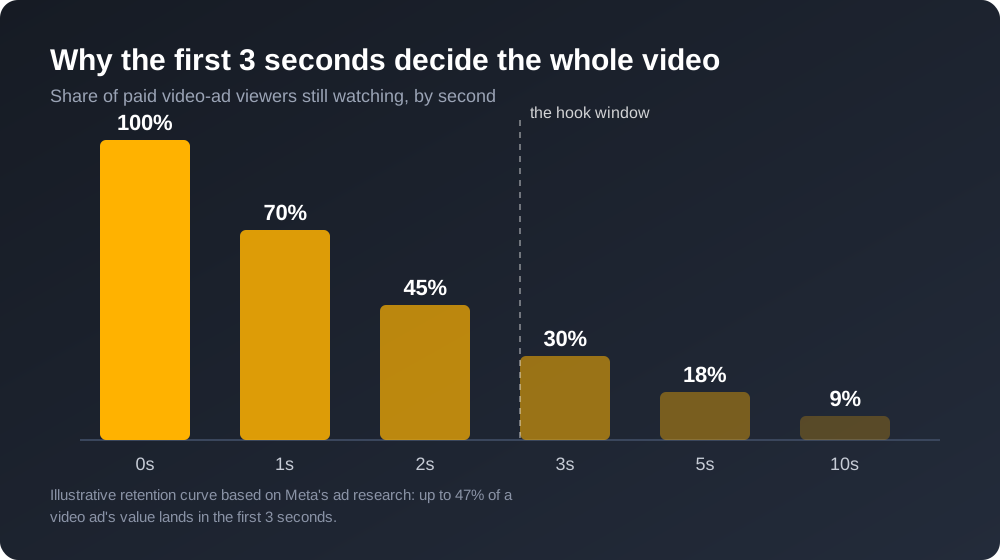
Most promotional videos fail because the creative was built to look good rather than to perform, and performance is decided before the story even starts. Research from Meta's own ad platform shows that up to 47% of a video ad's total value is delivered in its first three seconds, with roughly 65 to 75% of paid video views ending before that three-second mark passes. If the hook does not land instantly, the rest of the video, however well shot, is watched by almost nobody.
This is not a hypothetical problem. It is the exact complaint one brand raised directly with Soul Media's production team after working with a previous agency: they had spent roughly six thousand pounds on a polished video and received around 300 views, two of which came from their own staff checking the link worked. That is not a filming problem or a lighting problem. It is a strategy problem, and it shows up constantly across the industry.
Picture a twelve-person direct-to-consumer skincare brand gearing up for a Black Friday push. The founder briefs an agency for a "premium, cinematic" 60-second brand film, gets a beautifully graded edit back three weeks later, and drops it straight into a Meta ad set with no cutdown, no caption strategy and no separate hook for the first three seconds.
The video looks like a TV commercial. It performs like one too, at social media prices, which means it barely gets seen. The spend on media never recovers because the creative was never built for the platform it landed on.
Compare that to a version of the same brief where the production team starts with the platform and the metric, not the mood board. The hook opens on the product solving the exact problem the target customer typed into Google that morning.
The pacing matches a nine-second attention span instead of a cinema trailer. A text overlay repeats the offer for viewers watching on mute, since most social video is watched with sound off by default. That is the difference between promotional video production done as a creative exercise and promotional video production done as a performance channel.
The Main Types of Promotional Video Production (and Which One Fits Your Goal)
The right type of promotional video depends on where it runs, who is meant to see it, and what action follows the watch. Choosing the wrong format for the platform is one of the most common and most expensive mistakes in this category.
| Video Type | Typical Length | Best Platform | Core Objective |
|---|---|---|---|
| Social media ad creative | 6 to 30 seconds | Meta, TikTok, Instagram Reels, YouTube pre-roll | Stop the scroll, drive clicks or app installs |
| Product launch video | 30 to 90 seconds | Website, YouTube, email, paid social | Explain the product and create launch-day urgency |
| Brand campaign film | 60 to 120 seconds | Website, YouTube channel, above-the-line media | Build brand equity while pushing a seasonal or market message |
| Event and seasonal promo | 15 to 60 seconds | Social, in-app, retail screens | Drive attendance or urgency around a fixed date |
| Middle East market campaign | Varies by platform | Instagram, TikTok, Snapchat, YouTube (GCC) | Localised commercial messaging with cultural adaptation |
Social Media Ad Creative
This is the shortest, highest-volume format, built specifically for paid feeds. It needs the right aspect ratio for each placement, a hook inside the first second or two, and pacing that assumes the viewer has not chosen to be there. Performance marketing teams typically run several cutdowns of the same core asset to test hooks, offers and captions against each other.
Product Launch Videos
A launch video carries more explanation than an ad, because the audience needs to understand what the product is before they can want it. Script, product demonstration, voiceover and motion graphics usually all sit inside a single edit, timed to go live alongside the launch date rather than drip-fed afterwards.
Brand Campaign Films
Longer-form promotional content that works across a website, a YouTube channel and paid media at once. Campaign films carry more narrative than a straight ad, which makes them well suited to market entry, seasonal pushes, or moments when a brand needs to build a reason to care before it asks for a sale.
Event and Seasonal Promotional Videos
Built around a fixed date, retail promotions, trade shows, Ramadan and Eid campaigns, Black Friday, product events, these videos trade subtlety for urgency. They are usually short, fast-cut, and designed to be seen multiple times in the run-up to the date they are promoting.
Middle East Market Campaigns
Brands entering the Gulf region need promotional content adapted to local platform habits and cultural expectations, not simply subtitled. Arabic voiceover, adjusted pacing, and messaging reviewed against local norms all affect how a campaign performs in markets like the UAE, Saudi Arabia and Qatar.
What a Professional Promotional Video Production Process Actually Looks Like
A promotional video production process that works follows four stages in order, and skipping the first one is the most common reason budgets get wasted. Here is how Soul Media structures every promotional project, from initial brief to final delivery.
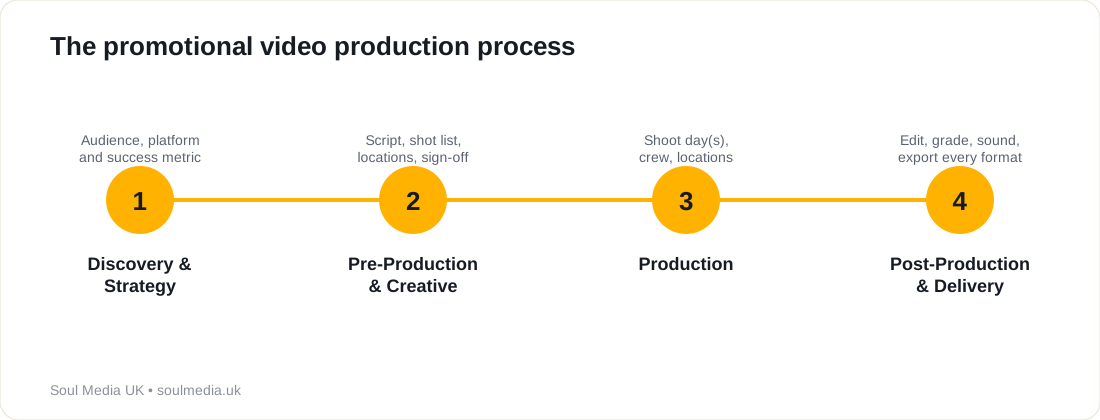
Step 1: Discovery and strategy. The production team establishes what is being promoted, who needs to see it, where it will run, and what success actually looks like in numbers. This is the stage most agencies rush or skip entirely, and it is the stage that determines whether the finished video performs.
Step 2: Pre-production and creative. Script, shot list, locations, casting where needed, and music direction are all agreed before a single frame is filmed. The client sees and signs off the creative direction in advance, so there are no surprises at the edit stage.
Step 3: Production. A crew handles the shoot, whether that is a single-camera content day or a full multi-location production across several UK cities or overseas markets. Crew size and shoot days are the two biggest drivers of cost at this stage.
Step 4: Post-production and delivery. Editing, colour grading, sound design and motion graphics come together, with final exports delivered in every format the campaign needs, square for feed, vertical for Reels and TikTok, widescreen for YouTube and web, and broadcast specs where required.
How Much Does Promotional Video Production Cost in the UK, Europe and the Middle East?
Promotional video production in the UK typically costs between £1,000 for a half-day social content package and £10,000 or more for a multi-location campaign film, with most brands landing between £1,500 and £6,000 for a standard project. Cost is driven mainly by shoot days, crew size, number of locations, and how much post-production the deliverables need.
| Package | Typical Price (UK) | What It Covers | Delivery |
|---|---|---|---|
| Basic | From £1,000 | Half-day shoot, 2-person crew, 1 location, basic edit, 1 revision round | Around 10 days |
| Standard | From £2,499 | Full-day shoot, 3-person crew, 2 locations, motion graphics, 2 revision rounds | Around 10 days |
| Premium | From £4,999+ | Two-day shoot, full crew, multiple locations, unlimited revisions, raw footage included | Around 14 days |
Outside the UK, expect two extra cost lines: travel and accommodation for crew filming in Europe or the Gulf, and localisation, Arabic subtitling or voiceover, regional casting, and an extra review pass for cultural fit. Neither is usually a large percentage of the total budget, but both should be quoted upfront rather than added as a surprise after the shoot.
Timeline-wise, a standard promotional video runs three to five weeks from brief to delivery in most UK production houses, including Soul Media, though rush timelines are achievable for social-first content or campaign-reactive work when the brief is clear from day one.
Promotional Video Production for the Middle East and Europe: What Changes
The core production process for a promotional video does not change much between London and Riyadh, but the creative decisions inside it do, and getting them wrong is a common way for market-entry campaigns to underperform. A UK-shot 30-second ad translated word for word into Arabic subtitles usually reads as exactly what it is: a UK ad with subtitles bolted on.
Consider a UK-based consumer brand entering the UAE and Saudi markets for the first time. The temptation is to reuse the existing European asset with new voiceover.
What tends to work better is treating the Gulf launch as its own brief: reviewing pacing and messaging against local platform habits (Snapchat still carries meaningful reach across parts of the GCC alongside Instagram and TikTok), adjusting imagery and tone for cultural fit, and building in a dedicated review pass with someone who understands the market rather than a straight translation check.
European expansion carries a lighter version of the same lesson. A campaign built for German or Nordic audiences usually needs pacing and tone adjustments even without a language barrier, since attention spans, humour and directness vary by market more than most UK-based marketing teams expect.
Treating every non-UK market as a subtitle job rather than a fresh creative pass is one of the most common reasons international promotional campaigns underperform against their UK benchmark.
How to Choose a Promotional Video Production Company
The right promotional video production partner should ask about your target metric before they ask about your mood board, because a company that starts with aesthetics before objectives is likely to deliver a video that looks good and does nothing. A handful of questions separate a strategy-led partner from a production shop that only films what it is told to film.
Ask any shortlisted company how they would cut a single 60-second asset for three different platforms, and listen for whether they mention aspect ratio, caption strategy and hook variation without being prompted. Ask to see examples of paid social work specifically, not just showreels, since a beautiful brand film says little about a team's ability to produce for a feed.
Ask what happens if the first version underperforms: a partner with a real process will talk about testing alternate hooks or cutdowns, not simply reshooting from scratch at extra cost.
Transparent pricing, a clear revision policy, and a producer who is present on set rather than delegating everything to a junior crew are the other markers worth checking before signing off a brief. Agencies that pitch with senior staff and then hand the account to a rotating junior team are a common source of the exact "£6k for 300 views" outcome described earlier in this guide.
Which Industries and Audiences This Applies To
Promotional video production is most valuable for organisations running time-bound campaigns rather than always-on brand content, which spans a wide range of industries and team types.
Growing eCommerce and DTC brands scaling paid social budgets need a steady stream of ad creative that keeps pace with spend, since ad fatigue sets in fast on platforms like Meta and TikTok. B2B companies preparing for trade shows or sales cycles use promotional video for LinkedIn campaigns, product demos and event-specific assets that support a sales team's pitch.
Consumer brands entering new UK, European or Gulf markets rely on promotional video as the fastest way to establish presence before longer-term brand content follows. Retail and hospitality businesses running seasonal pushes, Black Friday, Ramadan and Eid campaigns, product drops, need urgency-driven video on a fixed production and publishing schedule.
Agencies without in-house production capability often bring in a specialist partner rather than carrying the overhead of an internal crew, which keeps a reliable production line without the agency markup being passed on twice.
Final Thoughts
Promotional video production only works when the strategy comes before the camera, not after the edit. The brands that get burned once, six thousand pounds for a video nobody watched past the second scene, almost always made the same mistake: they briefed for a look rather than a metric.
The ones who get it right treat every promotional video as a piece of a campaign, built for a specific platform, a specific audience and a specific action, with the production values supporting that goal rather than replacing it.
If you are planning a launch, a paid social push, or a market-entry campaign across the UK, Europe or the Middle East, start the conversation with the outcome you need, not the aesthetic you like. Request a quote for promotional video production and we will come back with a scope, a timeline and a creative approach built around what your campaign actually needs to do.
